
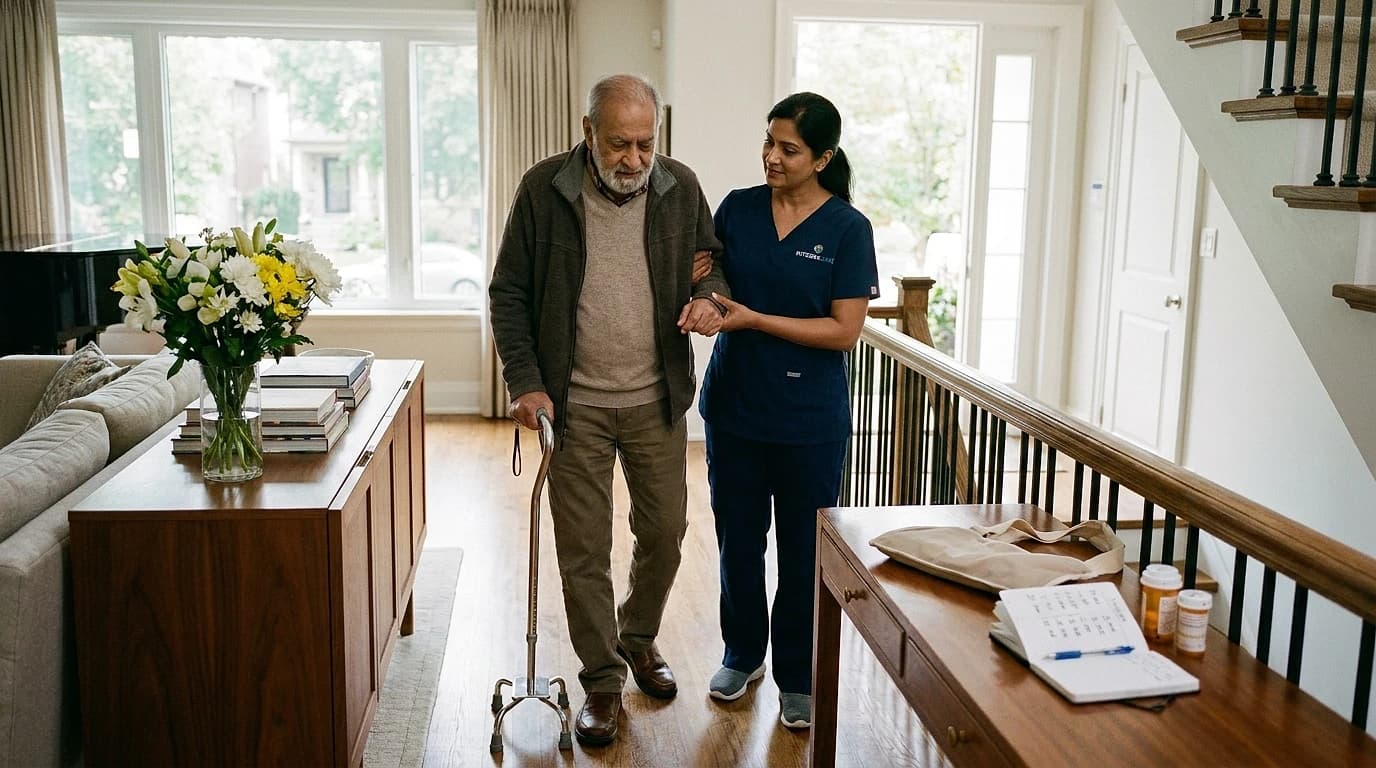
When a parent or spouse comes home after a stroke, the question families ask isn't really "what's the best care?" It's "how do we get our person back?" The honest answer is that recovery happens in the kitchen, the hallway, the bathroom, in the small repeated efforts of daily life, not just in a clinic. That's why home-based stroke care has become such an important part of recovery in Toronto, and why choosing the right kind of support matters so much.
This guide walks through what effective stroke recovery at home actually involves, who should be part of the care team, and how families in Toronto and North York typically arrange and pay for it.
Why Home-Based Stroke Care Works So Well
Stroke is one of the leading causes of adult disability in Canada, and about half of people living with the effects of stroke need help with everyday activities like eating, bathing, dressing, and getting around (Heart and Stroke Foundation). Yet the system doesn't always get people the rehabilitation they need right away: only about half of stroke patients in Ontario accessed post-acute rehabilitation in 2019/20, and many received just 69 minutes of direct therapy a day, far below the 180 minutes recommended in the Canadian Stroke Best Practices (CorHealth Ontario).
This is one of the reasons home-based rehabilitation has become so valuable. Research comparing home-based and centre-based stroke rehabilitation has found home-based care leads to greater client satisfaction, less caregiver strain, and fewer hospital readmissions (American Heart Association). Another meta-analysis found home-based rehabilitation combined with early supported discharge reduced hospital stays by 13 days on average and lowered overall costs by 15%, without compromising outcomes (Canadian Journal of Neurological Sciences). In plain terms: people tend to recover better, and more comfortably, in the environment they'll actually be living in.
What Good In-Home Stroke Care Actually Looks Like
The best stroke care at home isn't one service. It's a coordinated combination of support that changes as the person's needs change. In practice, families often start with more hands-on help in the first weeks (bathing, dressing, transfers, meal prep) and gradually shift toward supervision and encouragement as strength and confidence return.
Good in-home stroke care typically includes:
- Personal care support for bathing, dressing, mobility, and safe transfers
- Skilled nursing for medication management, wound care, swallowing precautions, and monitoring for complications
- Structured practice of daily tasks (walking to the bathroom, using utensils, buttoning a shirt) that mirrors what a physiotherapist or occupational therapist recommends
- Communication support for clients with aphasia or speech changes
- Companionship and cognitive stimulation, which matters as much as physical recovery for mood and motivation
For a closer look at how families manage the practical, day-to-day side of this, our guide on caring for a stroke patient at home in Toronto walks through common routines and safety considerations.
Building the Right Care Team
Most stroke survivors discharged home don't automatically receive ongoing therapy. In Canada, 39% of stroke patients are discharged home with no support services at all, and only 19% go home with some referrals in place (Canadian Stroke Best Practice Recommendations). This is why families often need to actively build a care team rather than assume one will appear.
In Toronto, eligible stroke survivors can be referred through Ontario Health atHome for publicly funded services such as physiotherapy, occupational therapy, social work, and speech-language pathology after discharge (Stroke Network of Southeastern Ontario). Ontario Health atHome also coordinates referrals to other community stroke resources across the city (Toronto Stroke Networks). Private, in-home support fills the gaps around this public therapy, providing daily hands-on care and supervision that publicly funded visits alone can't cover.
At Guardian Home Care, this usually means a blend of Personal Support Services for daily living tasks and In-Home Nursing Care for medication and clinical monitoring, layered around whatever public therapy the client is receiving. Our Stroke Care team works specifically with families navigating recovery at home, from the first days after discharge through longer-term rebuilding of independence. If your loved one is coming home from hospital soon, our guide to the first 72 hours after discharge covers what to prepare before they arrive.
Paying for Stroke Care in Toronto
Private-pay home care gives families more control over hours, caregiver consistency, and the pace of care than publicly funded visits alone typically allow. Costs vary by the number of hours, level of care (personal support versus nursing), and whether care is daytime, overnight, or live-in. Because private-pay rates differ by provider and by client need, the most reliable way to get an accurate number is to book a Free In-Home Assessment, where a care coordinator reviews the person's needs and outlines a plan with clear costs attached.
Some families choose to combine private care with public funding through Family-Managed Home Care (HCCSS), which allows a family to direct funding toward the specific caregivers and schedule that work best for their situation. Our article on how family-managed home care works in Ontario explains the process in detail.
Frequently Asked Questions
How soon after a stroke should home care start?
Many families arrange support before their loved one leaves hospital, so care is in place the moment they arrive home. Early, consistent support during the first weeks tends to make the transition safer and less stressful, particularly around mobility and medication.
Can home care replace hospital-based rehabilitation?
No. In-home caregivers and nurses support and reinforce the therapy plan set by a physiotherapist, occupational therapist, or speech-language pathologist. Always follow your clinical team's rehabilitation plan and speak with your doctor before changing therapy routines.
What's the difference between a PSW and a nurse for stroke recovery?
A personal support worker helps with daily activities like bathing, dressing, and mobility, while a nurse manages medications, monitors for complications, and handles clinical needs such as swallowing precautions or wound care. Many stroke recovery plans use both, depending on the stage of recovery.
Is home care covered by OHIP?
OHIP does not cover private in-home caregiving, but Ontario Health atHome may fund certain nursing and therapy visits for eligible stroke survivors. Private-pay care and Family-Managed Home Care are common ways to fill the remaining gaps.
How do I know how many hours of care my parent needs?
This depends on their mobility, cognition, and how much support is available from family. A Free In-Home Assessment is the most reliable way to get a specific recommendation tailored to their situation.